
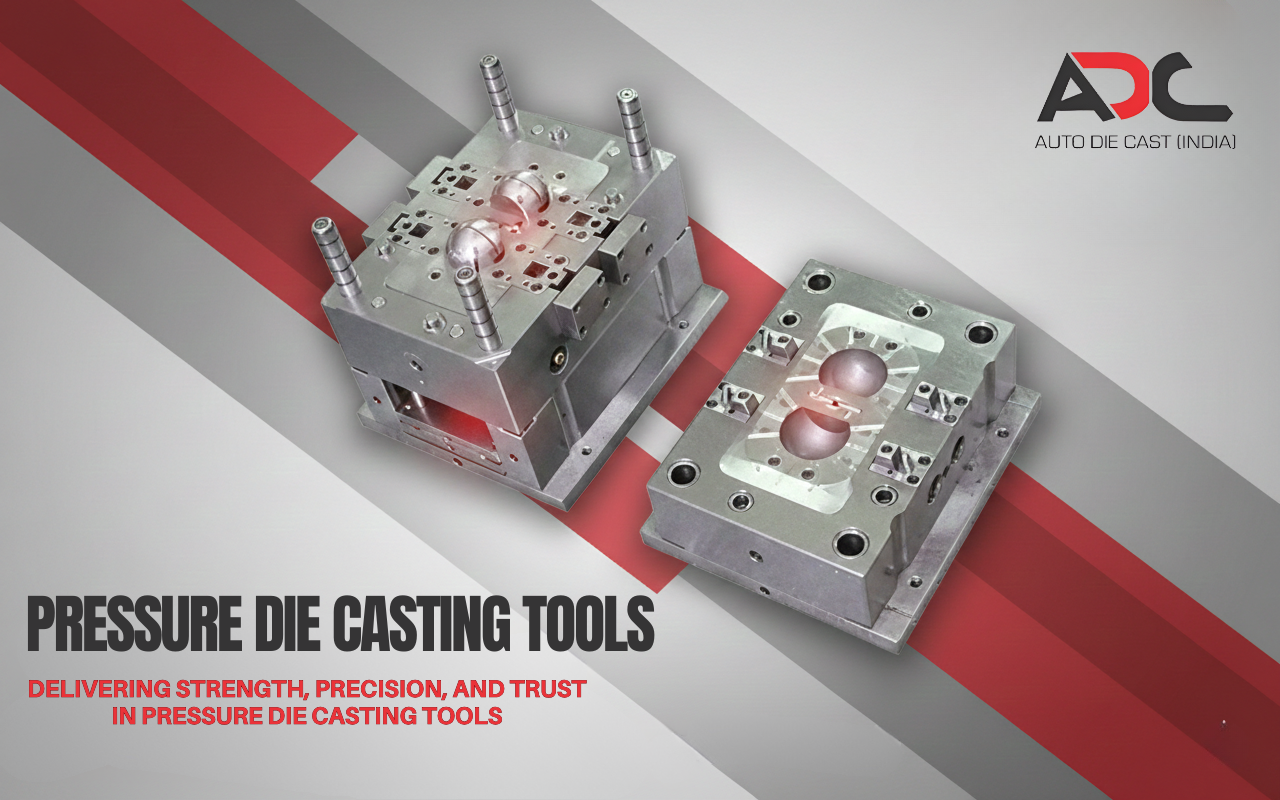
Pressure Die Casting is widely used for the production of precise, strong, and repeatable metal parts at a high speed. However, even the best manufacturing systems have challenges in the long run. Quality problems, delays and cost overruns that can be classified as major causes are mostly due to defects in Pressure Die Casting Tools. If manufacturers were to get early insights into these problems and then fix them in a proper way, it could result in quality maintenance and prolonging the life of the tools.
Quality steel is needed for the tools, as well as proper heat treatment techniques. Checking every now and then and applying paint on the surface can minimize wear & tear.
How to fix it:
Quality steel for tools and quality heat treatment are highly required. Checking every now and then and applying paint on the surfaces can reduce wear & tear.
Even if the surface of the cast parts has a rough texture, it may well be the case that rather than a Pressure Die Casting problem, it is a Pressure Die Casting Tools issue. Scratches, corrosion, or poor polishing of the die inner part can affect quality in the parts.
How to fix it:
The problem will be eliminated if the surfaces of the dies are polished and the Internal spaces are kept clean. Die Protective layer also help improve the surface qualities and prevent metal sticking when casting.
Flash occurs when molten metal leaks out between die surfaces A typical problem associated with the misalignment or damage of Pressure Die Casting Tools. The flash increases the quantity of waste material and demands additional trimming work.
How to fix it:
Ensure proper die alignment and routine inspection of locking systems. The guide pins and holding pressure also have a bearing on flash formation, and replacing the guide pins and ensuring correct holding pressure are effective.
Molten aluminium that sticks to the surface of a die is called die soldering. Problem is quite common in Pressure Die Casting Tools.
How to fix it:
Appropriate die temperature control and the use of good release agents can help avoid soldering. Selecting the right die materials and protective layer is also an important factor in addressing this problem.
Because of heating and cooling processes, there are thermal stresses that result in the generation of cracks in Pressure Die Casting Tools. The size of the cracks increases with time; hence, the lifespan of the tool reduces.
How to fix it:
The design and management of cooling channels can mitigate thermal shock. Startups with a slow ramp rate and slow cooling can improve tool longevity.
Although porosity can be viewed as a defect in casting, it is actually very sensitive to the design of the tool. If the venting in Pressure Die Casting Tools is absent, then the trapping of air along with other gases takes place, which further results in voids.
How to fix it:
Air outlet design needs to be improved, and cleaning of the vents should be done on a regular basis. Positioning of gates and their courses help metal to freely flow.
Sticking of parts inside the die or getting damaged during ejection is another common problem. This is normally experienced when the ejector pin design of the Pressure Die Casting Tools is not good or there are cooling irregularities.
How to fix it:
Use properly located ejector pins and ensures consistent cooling of the die The lubrication of part remover systems ensures smooth removing of parts as well.
If the size of the casted parts is not satisfied, the issue might be related to the size accuracy of the tooling. If the mold is damaged due to wear and tear or improper cutting of the Pressure Die Casting Tools, size differences might be experienced.
How to fix it:
Precise machining operations, measurement of the die cavities, shall be accomplished. The rework of the die cavities at the appropriate time shall ensure this.
Moisture, chemicals, or liquid metal can corrode materials used for tooling. This will impact the working life of Pressure Die Casting Tools. This will further impact the quality of the production parts.
How to fix it:
Storing tools in an appropriate manner, cleaning them, and using protective layer will also go a long way in reducing corrosion. Materials used in making tools which have a tendency of resisting corrosion will also have a positive impact.
Functioning of the tooling requires a good knowledge of designs, use of quality materials, and maintenance of the equipment. The Indian manufacturer Auto Die Cast applies its knowledge in precision engineering and maintaining the die cast tooling to reduce its downtime in the production process.
The production of complicated components, including Aluminum Pressure Die Casting Components, that need very precise tolerances as well as surface finish quality, is carried out only with premium tools. Detail attention is therefore required during the design of tools as well as their upkeep.
Experience in die casting tooling can greatly contribute to a person’s expertise in die casting and add value to their professional life in several ways.
However, most casting difficulties can be prevented by recognizing problems with tooling at an early stage. This will ensure that production runs smoothly and economically. It is always better to invest in quality tools and expertise rather than to endure the costs of casting difficulties repeatedly. If you are facing constant issues with your tooling or if you desire to upgrade your tooling systems, then it is best that you reach out to the experts at Auto Die Cast (India) who will make sure that you have higher quality, longer tool life, and more productivity.
Pressure die casting tools are specially designed molds that are utilized to transform copper, aluminum, or other metals to their precise form under controlled conditions. The application of these tools in the manufacturing process enables the realization of identical specifications, excellent surface quality along with large-scale production being uniform.
High-quality equipment or tools definitely lead to more precise work, longer life span of the tools, and diminished amount of defects. The use of good quality tools prevents production difficulties like flash, porosity, and uneven surfaces, thus saving both time and money.
If maintenance is not done properly, it will cause wear, cracks, corrosion, and dimensional errors to happen. These problems will subsequently result in higher rejection rates, slower production and increased overall manufacturing costs.
Regular inspections are advisable per production volume. Continuous monitoring will facilitate early detection of wear or damage, thus keeping the operation running smoothly and maintaining the quality of the product.
Auto Die Cast (India) has gained a reputation for being a master in tooling design, maintenance, and precision manufacturing, thus allowing companies to attain effective and first-rate production results.
If the problems with your tooling are persistent or if you just want a better tooling system, it would be a good idea to get in touch with the professionals at Auto Die Cast (India) who will ensure that you receive the advantages of quality improvement, extended tool life, and enhanced productivity.
Copyright © 2026 Auto Die Cast (India)
