
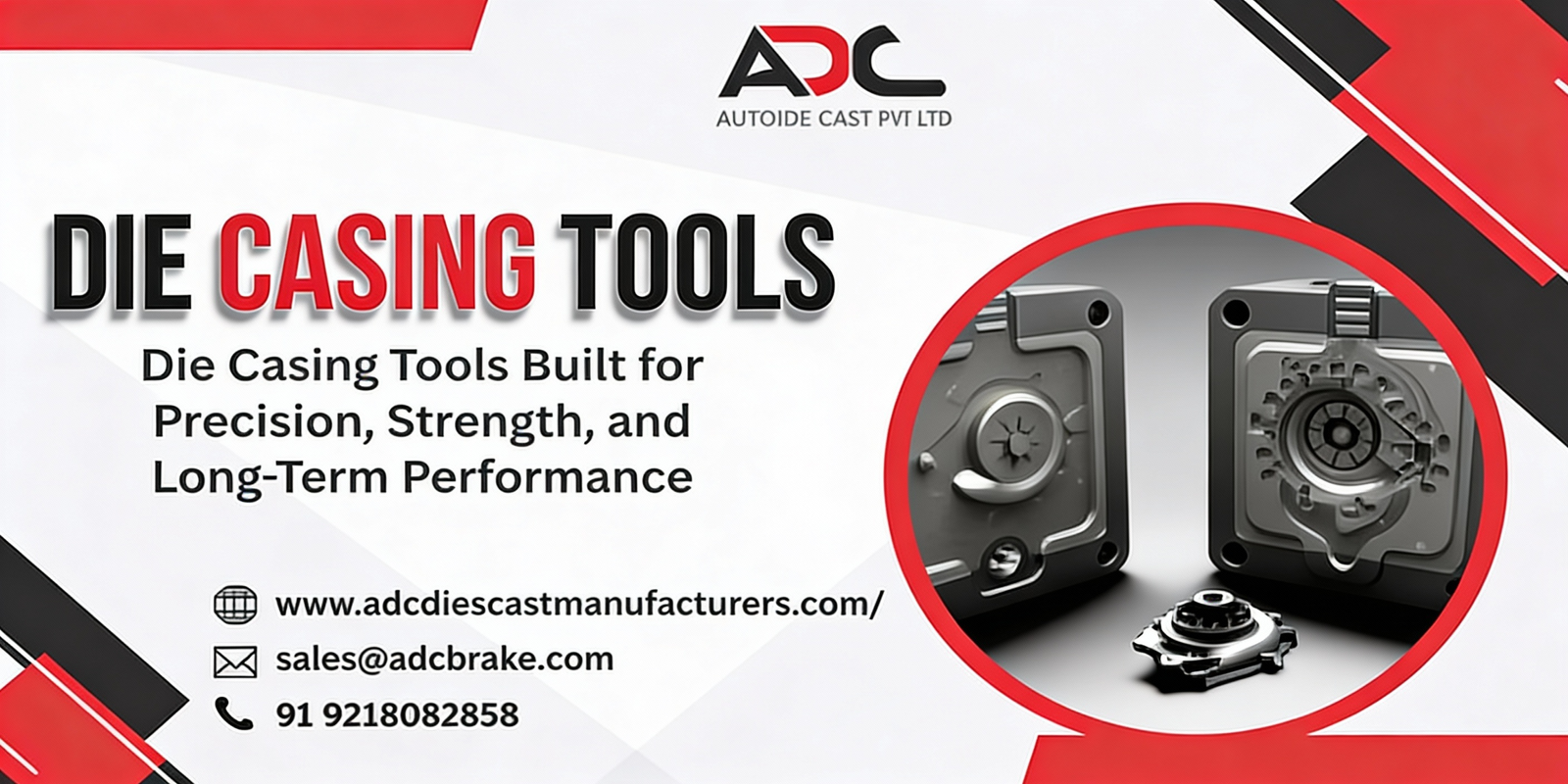
In the context of Die Casting, Tools involve many things beyond machines. Tools are considered assets that directly or otherwise have an effect on quality, rate of production, and costs associated with production. If quality maintenance of tools is performed, then this enhances the life of tools, thereby decreasing unscheduled downtime.
This E-Book will teach you the techniques on how to take good care of your Die Casing Tools to ensure they work well for several production runs. The techniques this E-Book will teach you will not be complicated for you to do on your own shop floor.
Each casting cycle adds pressure, heat and stress to the tool, thus causing wear through thermal stress, corrosion and surface damage over time. Maintenance is not just about fixing problems after they appear. It is about preventing damage before it affects production.
Well-maintained Die Casing Tools help achieve smooth casting flow, accurate dimensions, and a clean surface finish. They also reduce scrap rate and improve operator safety. Companies that follow a structured maintenance routine often see better return on investment from their tooling.
Cleaning represents the first step in tool maintenance. It is important to clean tools after each production cycle. Residual metal particles, lubrication residue, and dust can collect and compromise the surfaces over time.
Use soft brushes to clean away the waste, together with approved cleaning agents. Avoid the use of sharp instruments, which might end up scratching the surface. Some of the places to pay much attention to are the vents, runners, and corners where material has the tendency to accumulate. This helps cool the tools evenly for inspection.
Lubrication ensures the alleviation of friction, suppression of tool wear, as well as enhanced casting quality. On the other hand, inappropriate use of lubrication may negatively contribute to the accumulation of materials.
Use lubricating agents appropriate for die casting, as well as apply them correctly. Do not spray the lubrication agent on hot surfaces unnecessarily. Each of these techniques has been explained with reasons:
A visual inspection must be conducted daily. A slight crack, discolouration, or texture may be an indication of potential major issues.
Dimensional checks and alignment verifications should be done during the course of the weekly and/or monthly inspections. It might be helpful to keep a record in order to evaluate wear trends at a very early stage.
The largest problem of tool life is temperature or heat. Because of uneven cooling, tools crack or become distorted from the stress of heat.
Ensure that cooling channels are clean and unobstructed. Check the coolant flow rate and temperature. Stable cooling contributes to maintaining the shape of the tools and prevents wear when running long distances. In High Pressure Die Casting processes, temperature control is even more important owing to high temperature variations.
Surface condition directly affects the quality of the casting. Scratches or pitting may create sticking, flashing, or a surface defect.
Light polishing is done to remove any defects that may be formed in this stage. Routine polishing is done to achieve a smooth surface. Heavy grinding should never be done. Application of a protection layer may also be done to enhance the quality of the surface.
When tools are removed from machines, proper storage is important. Exposure to moisture, dust, or extreme temperature fluctuations may lead to corrosion.
Cleaning of the tools should be done thoroughly before storing them. Use rust-preventive oil to preserve them since rust affects their efficiency. Finally, store them in a dry place.
Storing them in a controlled environment, either dry or with proper humidity, helps the tools to be ready for use without any
Even the most optimal maintenance plan cannot be successfully accomplished without the proper training of people. The operators need to be aware of the basics of maintenance and warning symptoms for the Die Casing Tools.
The maintenance personnel should follow proper procedures and use proper tools when working with Die Casing Tools. There should be proper communication between the production team and the maintenance team regarding troubleshooting.
Preventive maintenance is always better than an emergency fix. The schedule for maintenance should be made depending on the production volume, the nature of the material, and experience.
The schedule should take into consideration cleaning, inspection, lubrication, and treatment. Each aspect would be tackled in an organised way that would lead to minimal unexpected failures. It has become standard practice among many manufacturing firms to follow die casting tooling maintenance.
Quality tools can only be manufactured by experienced manufacturer companies. Working with experienced manufacturers like Auto Die Cast (India) has given us confidence that their tools will last and be serviceable for many years to come. When tools are designed that way, maintenance work becomes more efficient.
A good partnership will therefore be of great help in terms of technical support, repair, and optimisation of performance. "Auto Die Cast (India) is set up to create long-term values; it is not short-term production."
Consistent care translates to less downtime, less tooling cost, and a better quality product. Additionally, the life of the Die Casing Tools also gets prolonged through consistent care.
Well-maintained tools enable effective business operations and help in meeting delivery commitments without any stress. With time, this boosts customer satisfaction and business reputation in the market.
Die Casting provides a means of producing components using molten metal through a die casting process. The two major advantages of die casting are the repetitive nature of die castings and their consistent finish.
Auto Die Cast (India) manufactures consistently and accurately shaped metal components through metal casting methods, a casting tool is needed as a way to help produce high quality parts in an efficient manner. When die tooling is designed and manufactured properly, rather than poorly, there will be an increase in the consistency of the casting process and a decrease in the likelihood of imperfection due to miscommunication between tooling suppliers. Furthermore, it gives manufacturers the opportunity to produce larger amounts of a product with consistent quality and be assured of its acceptability at all stages of production. Die tooling also allows manufacturers to improve production efficiency, reduce costs associated with producing castings and in turn will provide manufacturers with parts that meet the industry standard of quality as set forth by regulatory agencies.
Due to their ability to perform well under high pressures and many cycles of frequent heat, various types of high-grade alloy steel are often utilized in the production of molds or other devices that will undergo significant stress. High-grade steel alloys possess superior properties such as high strength, excellent wear resistance and long thermal stability, making them suitable for use over a prolonged period in metal casting processes.
The lifespan of a cast metal casting is determined by the material utilized in the production process, the usage frequency of the tool, and the level of maintenance performed on the tool after each use. As part of their ongoing relationship with Auto Die Cast (India) through regular maintenance, Auto Die Cast (India) will provide you with all the necessary components required to extend the life of your tooling.
To ensure a long life for your Molds/tooling, it is important to perform regular cleaning (to remove any dirt, dust or moisture), perform regular lubrication (to keep the tooling running smoothly), control cooling (to prevent cracking or warping), and perform regular inspections (to catch any potential problems before they become serious).
If you want your Molds/tooling to be successful from year to year, it is very important that you begin developing a strict maintenance plan.
Copyright © 2026 Auto Die Cast (India)
